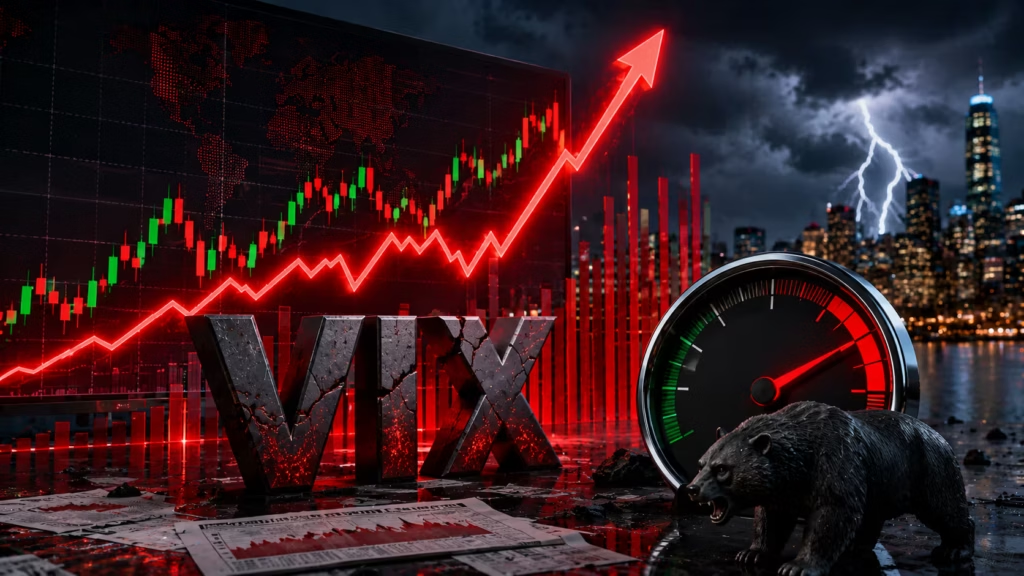
The VIX climbs as traders brace for a volatile market open this Tuesday, May 26, after U.S. markets stay closed on Monday for Memorial Day. With oil prices above $100 a barrel, a brand-new Federal Reserve chairman stepping into the role, and the U.S.-Iran conflict still unresolved, traders are heading back to their desks carrying a lot of uncertainty. The so-called “fear gauge” has swung sharply across 2026 — and the latest signals say volatility is far from done.
Here is what the numbers say, what is driving the tension, and what you should do to protect yourself before the opening bell rings Tuesday morning.
What Is the VIX and Why Does It Matter Today?
The Cboe Volatility Index (VIX) is Wall Street’s best-known measure of fear. It tracks the expected volatility of the S&P 500 over the next 30 days, based on options prices. When traders buy a lot of protection, the VIX rises. When markets feel calm, it falls.
VIX measures market expectation of near-term volatility conveyed by stock index option prices. In simple terms: a high VIX means the market expects big swings ahead, and a low VIX means investors feel relatively safe.
There are two rough rules traders follow:
A VIX below 15 signals a calm, confident market. A VIX above 20 means fear has arrived. A reading above 30 signals serious stress.
VIX Climbs as Traders Brace for a Volatile Market Open: The Latest Numbers
The VIX closed at 16.70 on Friday, May 22, 2026. Its 52-week range runs from 13.38 at the low end all the way to 35.30 on March 9, 2026, which marked its highest point in nearly a year.
That 35.30 spike on March 9 was the result of a perfect storm. Geopolitical uncertainty and trade tensions pushed the VIX to higher levels throughout the start of 2026, with a surge over 30 in March — a level that signals extreme uncertainty and one not seen since April 2025 after “Liberation Day” and the implementation of tariffs.
On March 2, 2026, the VIX staged a dramatic 12% rally, piercing the psychologically significant 20-level to close at 22.40. Then VIX surged as much as 20% to hit the intraday high of 28.57 on March 6, as the U.S.-Israel-Iran war escalated and oil prices spiked sharply higher.
The current level near 16–17 is calmer — but traders are not relaxed heading into this week. And for good reason.
What Is Driving Volatility Right Now? Live Analysis
The U.S.-Iran War and Oil Prices
The biggest wild card sitting over the market right now is the ongoing U.S.-Iran conflict. Following this weekend’s strikes by the U.S., oil markets remain fairly stable as investors wait for Iran’s response. WTI 1-month implied volatility surged to as high as 68% last week before ending the week at 51%.
International Brent crude futures closed at $103.54 per barrel on Friday, May 22. Oil near $100 a barrel feeds directly into inflation expectations and puts pressure on both consumer spending and Federal Reserve policy.
One important note: U.S. inflation expectations have barely moved on this latest jump in oil prices, in sharp contrast to the spike seen during the 2022 Russia-Ukraine invasion. That has helped keep the VIX from running away — but the risk remains live.
A New Fed Chairman Steps In
On Friday, Kevin Warsh took the oath as the new Federal Reserve chairman. This matters a lot for markets.
Warsh arrives at an auspicious time. Earlier this week, the 30-year bond yield hit a nearly 19-year high, fueled heavily by Middle East conflict-driven inflation. The new Fed chairman faces immediate pressure to signal what comes next for interest rates, and any comment from Warsh could move stocks when markets reopen Tuesday.
Federal Reserve Governor Waller said he wants to hold rates steady for now, with future moves depending on whether inflation falls or the labor market weakens. He identified job creation as historically low — just over 100,000 jobs created in April and an average of 48,000 over the past three months.
Bond Market Stress and the Macro Backdrop
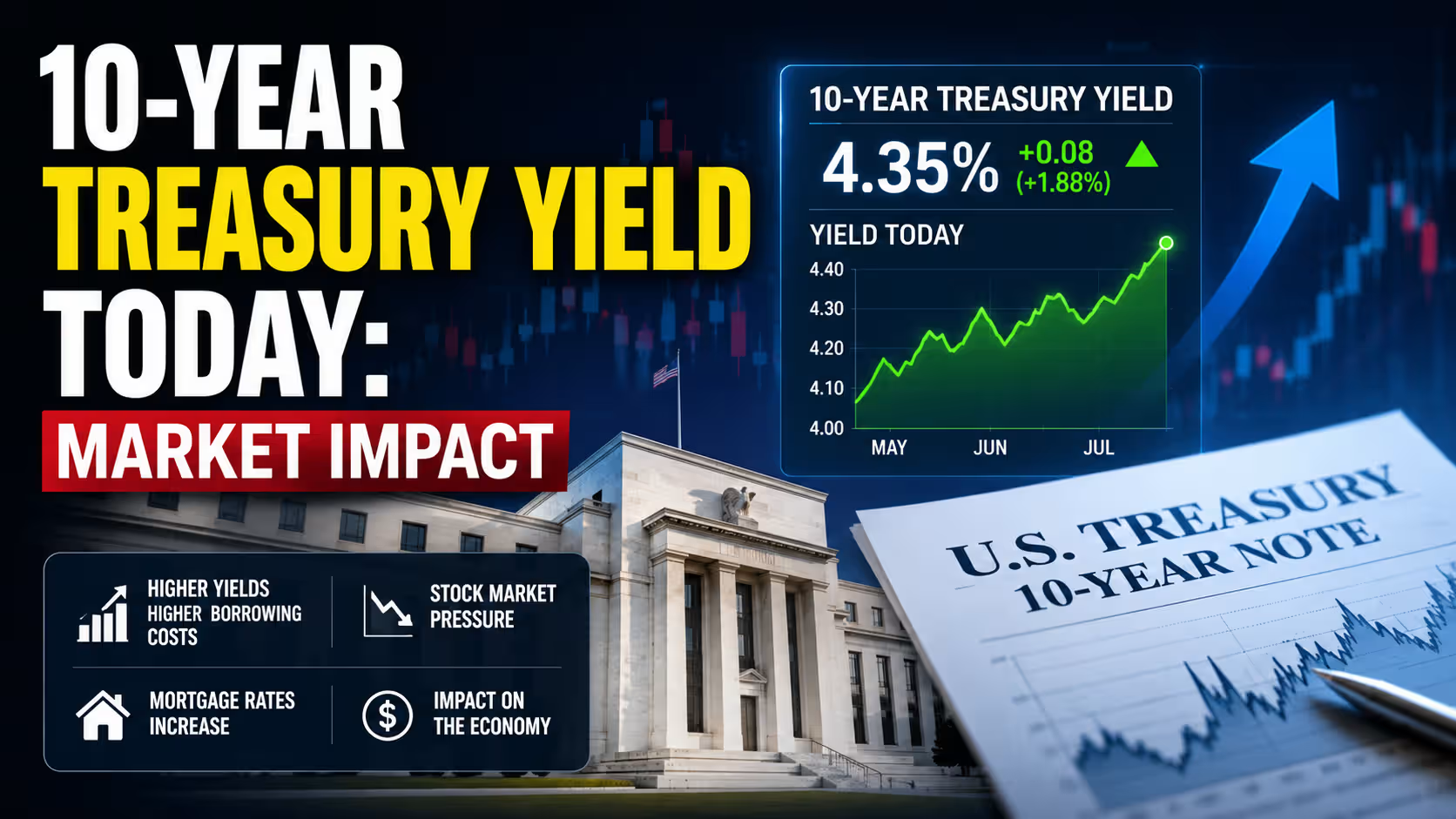
The 30-year Treasury yield near a 19-year high tells you something important: the bond market is not calm right now. When long-term yields stay elevated, borrowing costs rise for companies and consumers alike. That pressure feeds back into equity valuations and increases the chance of sharper moves in stocks.
The stock market finished higher on Friday, with the S&P 500 closing at 7,473.47, up 0.37%, and the Dow Jones climbing 294 points to close at 50,579.70. But as one market strategist put it on Friday: “It’s the everything market. The market is telling you today they’re much more concerned that they’re going to miss some sort of peace in the Middle East than they are about the risks of going home long over the weekend.”
What to Expect After Memorial Day: Prediction for the Week Ahead
Markets in the U.S. are closed Monday, May 25, for Memorial Day. The NYSE reopens Tuesday, May 26. Here is what traders are watching.
Key Earnings This Week
A smattering of earnings from key companies has the potential to move markets next week. Among the names to watch: Salesforce (a component of the Dow Jones Industrial Average), Dell Technologies, Costco Wholesale, and Dollar Tree, whose commentary on the consumer could move broader market sentiment.
Seasonally Choppy Territory
History adds another layer of caution. The Stock Trader’s Almanac shows that June is the worst month for the major averages in midterm election years. The S&P 500 has lost an average of 2.1% during that month. Traders heading into the last week of May need to factor this seasonal pressure into their thinking.
The Put-Call Ratio Signal
Sentiment on Friday, as gauged by the put-call ratio, ended bullish at 0.85. The S&P 500 stayed elevated above short-term horizontal support at 7,340. A break below that level would project a move back toward the 7,150 area — a threshold worth watching as a risk trigger.
How Traders Are Responding to Rising Volatility
When the VIX rises, smart market participants typically take a few specific steps. Here is what the data and professional traders suggest.
Hedging With Options
The surge suggests that the cost of protection against market downturns is rising rapidly, as institutional investors scramble to buy put options to hedge their portfolios. The highest-volume VIX contract on Friday was the June 17, 2026, 16.50 put with a volume of 30,206 contracts.
For individual investors, this means options protection is getting more expensive. Spreads and defined-risk structures tend to work better in high-volatility environments than straight calls or puts. Implied volatility tends to creep up into known events — so buying insurance before a known catalyst is usually wiser than buying it after the spike.
Watching Individual Stock Volatility
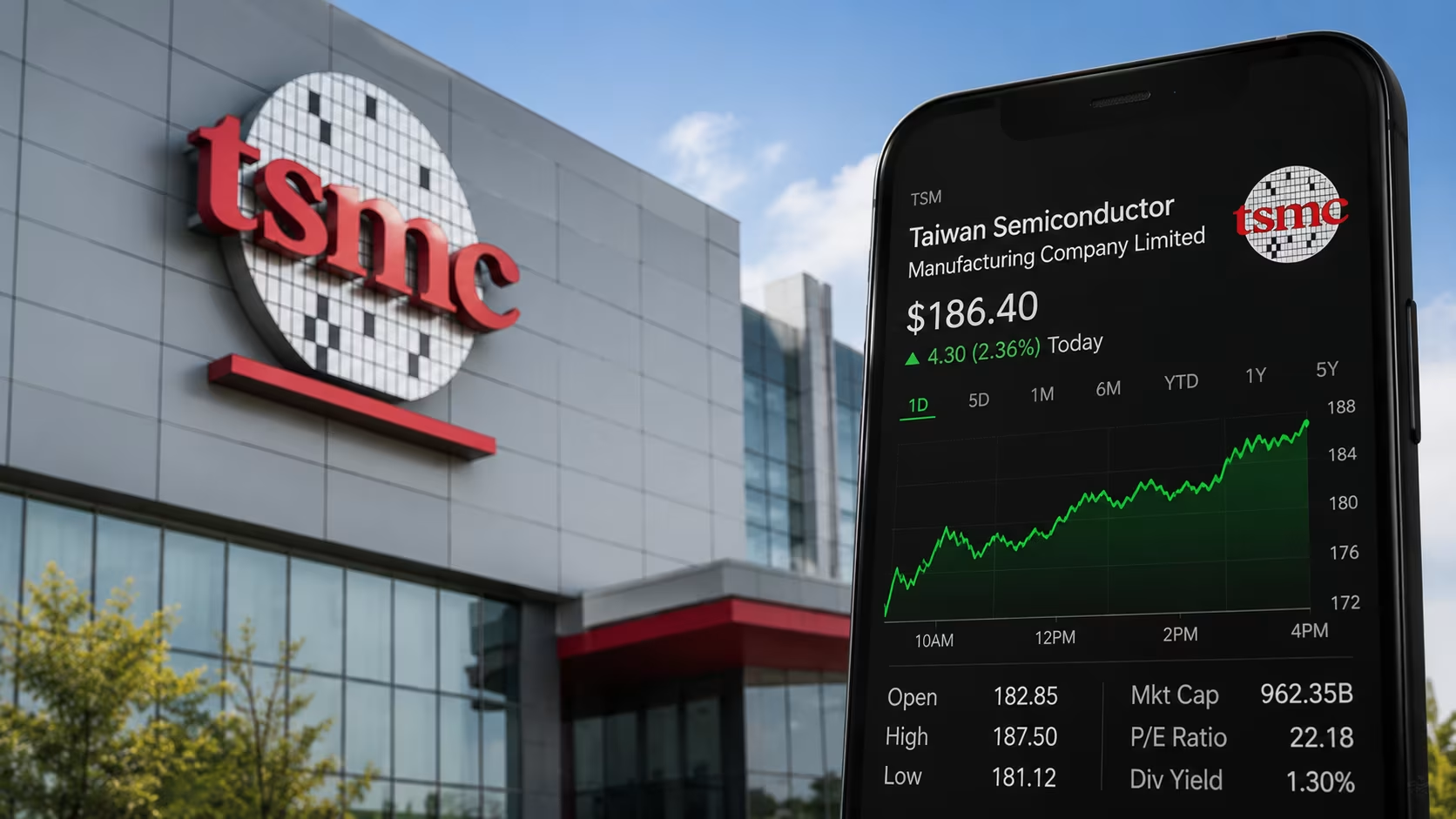
One of the most important stories in the market right now is the disconnect between the broad VIX and individual stock volatility. The muted VIX arguably presents a hedging opportunity that looks cheap compared to volatility in semiconductor stocks, which is 2.5 times more expensive.
In other words, while the overall market fear gauge looks calm-ish, individual stocks — especially in tech — are swinging hard. Traders are paying close attention to this gap.
Commodity ETFs and Safe Havens
Commodity ETFs like USO and DBC can rise in volatile market conditions if there is a spike in oil prices due to geopolitical risks, while bond ETFs like AGG may fall due to rising interest rates. Tech ETFs can have sharp price swings during risk-on/risk-off environments.
What Every Investor Should Do Right Now
Whether you are a day trader or a long-term holder, here are practical, no-nonsense steps for navigating a high-VIX environment.
Do Not Panic-Sell on the Open
The VIX at 16–17 is elevated from its 52-week low of 13.38, but it is a long way from the panic zone above 30. Stock bulls proved resilient in the face of what could have been the worst sell-off in the Nasdaq 100 since March, as the index staged a 1.5% intraday rally into the close on a recent volatile day. Volatility cuts both ways.
Watch the Key Level on the S&P 500
The S&P 500 is holding above short-term horizontal support at 7,340. That is your early warning line. If it breaks with strong selling volume when markets open Tuesday, that signals escalating risk. If it holds, dip buyers remain in control.
Track Oil Prices and Iran Talks in Real Time
Oil is the single biggest macro variable right now. A drop in oil prices — driven by progress in U.S.-Iran peace talks — would likely pull inflation expectations lower, ease bond yields, and reduce VIX pressure across the board. Watch oil futures Sunday night and Monday as part of your pre-market preparation.
Size Down Before a New Fed Chair Speaks
Anytime a new Federal Reserve chairman makes early public statements, markets can react sharply — especially when bond yields are already at multi-decade highs. Reduce position size going into any Warsh commentary this week. You can always add back exposure after the dust settles.
Favor Quality Over Speculation
In high-volatility environments, high-quality companies with strong earnings tend to outperform speculative names. This past earnings season has proven that companies are starting to see strong returns on their AI investment. The consumer, for now, remains resilient. Lean toward quality.
The Big Picture: What 2026 VIX History Tells You
Volatility in 2026 has followed a clear pattern. The year started quietly. Then geopolitical shock waves — tariffs, the Iran conflict, oil disruptions — sent the VIX into the high 20s and briefly above 30. Then calm returned as each crisis found at least a partial resolution.
Volatility has surged since 2026, with the VIX topping 30 for the first time since April’s tariffs as global markets faced off with another wave of Trump’s tariffs in a political rift. But each spike has been met by buyers looking for opportunity.
The lesson from 2026 so far: volatility spikes fast and often fades faster. The traders who prepare in advance — not after the open — come out ahead.
Final Thoughts
The VIX climbs as traders brace for a volatile market open on Tuesday, May 26. The ingredients for a rough morning are sitting right on the table: unresolved Middle East tensions, Brent crude near $104, a new Fed chair making early moves, near-19-year bond yield highs, and a historically weak seasonal period for stocks ahead.
But the fundamentals still have a floor. Earnings have been solid. Consumer spending holds. AI investment is delivering returns. The VIX at 16 tells you the market is watchful, not panicked.
Stay informed, stay nimble, and do not let the open-bell noise push you into decisions you have not already thought through.
When the VIX climbs before a market open, it signals that traders expect larger-than-usual price swings in the near term. The VIX measures implied volatility based on S&P 500 options prices. A rising VIX before the opening bell means investors are buying more protection, which typically points to growing fear or uncertainty about what the trading session will bring.
The VIX closed at 16.70 on Friday, May 22, 2026. Its 52-week range runs from a low of 13.38 to a high of 35.30, which was hit on March 9, 2026, during peak geopolitical stress from the U.S.-Iran conflict and tariff escalation. The current level is elevated but well below the danger zone above 30.
U.S. markets are closed Monday, May 25, for Memorial Day. When they reopen Tuesday, traders face a mix of risks: ongoing U.S.-Iran conflict, Brent crude near $104 per barrel, a new Federal Reserve chairman who just took office, 30-year bond yields near a 19-year high, and key earnings from major companies like Salesforce and Dell Technologies. Any one of these factors can spark sharp moves.
Most traders and analysts treat a VIX above 20 as a caution signal, indicating elevated fear in the market. A reading above 30 signals serious stress and has historically preceded or accompanied sharp market sell-offs. In 2026, the VIX surpassed 30 in March during peak tariff and geopolitical fears — its highest reading since April 2025’s Liberation Day. The all-time record for the VIX was 82.69, set in March 2020 during the COVID-19 crash.
Oil prices and market volatility are closely linked, especially during geopolitical conflicts. When oil prices spike sharply — as they did when WTI crude surged toward $90 per barrel in early March 2026 amid U.S. strikes on Iran — inflation fears rise, bond yields climb, and investors buy more downside protection, pushing the VIX higher. Conversely, falling oil prices tend to ease inflation worries and reduce market fear, pulling the VIX lower.
Regular investors can take several steps when volatility is elevated: reduce position sizes before major market-moving events, favor high-quality companies with strong earnings over speculative stocks, avoid making emotional buy or sell decisions at the opening bell, consider defined-risk options strategies like spreads if you use options, and keep a close watch on key support levels such as the S&P 500’s 7,340 level. Staying in cash or cash equivalents during extreme uncertainty is also a valid choice.
Yes, according to the Stock Trader’s Almanac, June is the worst month for the major averages in midterm election years. The S&P 500 has lost an average of 2.1% during June in those years. Combined with the current geopolitical uncertainty and elevated bond yields heading into summer 2026, investors should manage expectations carefully as the calendar flips to June.