Why the Nasdaq Is Moving Fast and What Investors Should Know

The Nasdaq is moving fast, and millions of everyday investors are trying to figure out what it means for their money. In May 2026, the Nasdaq Composite hit a fresh record high of 26,274.13 — a level few imagined just a year ago. Powered by artificial intelligence (AI), strong tech earnings, and massive corporate investment, the index is on a historic run. But with inflation data rattling markets mid-week, the road ahead is not without bumps. Here is everything you need to know, explained simply and clearly.
What Is the Nasdaq and Why Does It Matter?
The Nasdaq is one of the most-watched stock market indexes in the world. It tracks thousands of companies listed on the Nasdaq Stock Market, with a heavy lean toward technology, software, semiconductors, and biotech firms.
The Nasdaq-100, a subset of the broader index, focuses on the 100 largest non-financial companies. Names like Nvidia, Apple, Microsoft, Alphabet, and Meta all sit inside it.
When the Nasdaq goes up, it usually means investors feel confident about technology and growth companies. When it falls, it often signals fear about rising interest rates, weaker earnings, or broader economic trouble.
Since December 31, 2007, the Nasdaq-100 has surged over 1,308% — more than doubling the S&P 500’s return of 543% over the same period. That kind of long-term outperformance is one big reason why investors keep coming back to it.
Latest Analysis: Where the Nasdaq Stands Today in 2026
As of mid-May 2026, the Nasdaq Composite has gained approximately 8.3% year-to-date. That gain comes on top of a strong 2025, when the Nasdaq Composite and Nasdaq-100 each advanced over 21%.
The index reached a record closing high of 26,247.08 on May 9, 2026, and then climbed even higher to 26,274.13 on May 11. That momentum came from a powerful combination of factors:
Strong Earnings Season: Of 440 S&P 500 companies that reported Q1 2026 results, 83% beat analyst earnings expectations. Tech companies led the charge.
Semiconductor Surge: The PHLX Semiconductor Index jumped 2.6% in a single session on May 11, as chip stocks rallied sharply on AI demand.
AI Spending at Record Levels: Large tech companies are pouring hundreds of billions of dollars into AI infrastructure. That spending translates directly into higher revenues and earnings for companies across the Nasdaq.
However, May 12 brought a reality check. Hotter-than-expected April inflation (CPI) data caused the Nasdaq to pull back about 1.1%, as investors worried the Federal Reserve might delay interest rate cuts. It is a clear reminder that even the strongest rallies face turbulence.
Why the US Dollar Index Is Crashing and Gold Prices Are Rising
Why the Nasdaq Is Moving Fast: The 3 Biggest Drivers
1. The Artificial Intelligence Investment Boom
AI is the single biggest story driving the Nasdaq right now. The global AI market sits at roughly $390.9 billion in 2025 and analysts project it will grow to $3.5 trillion by 2033 — a compound annual growth rate of over 30%.
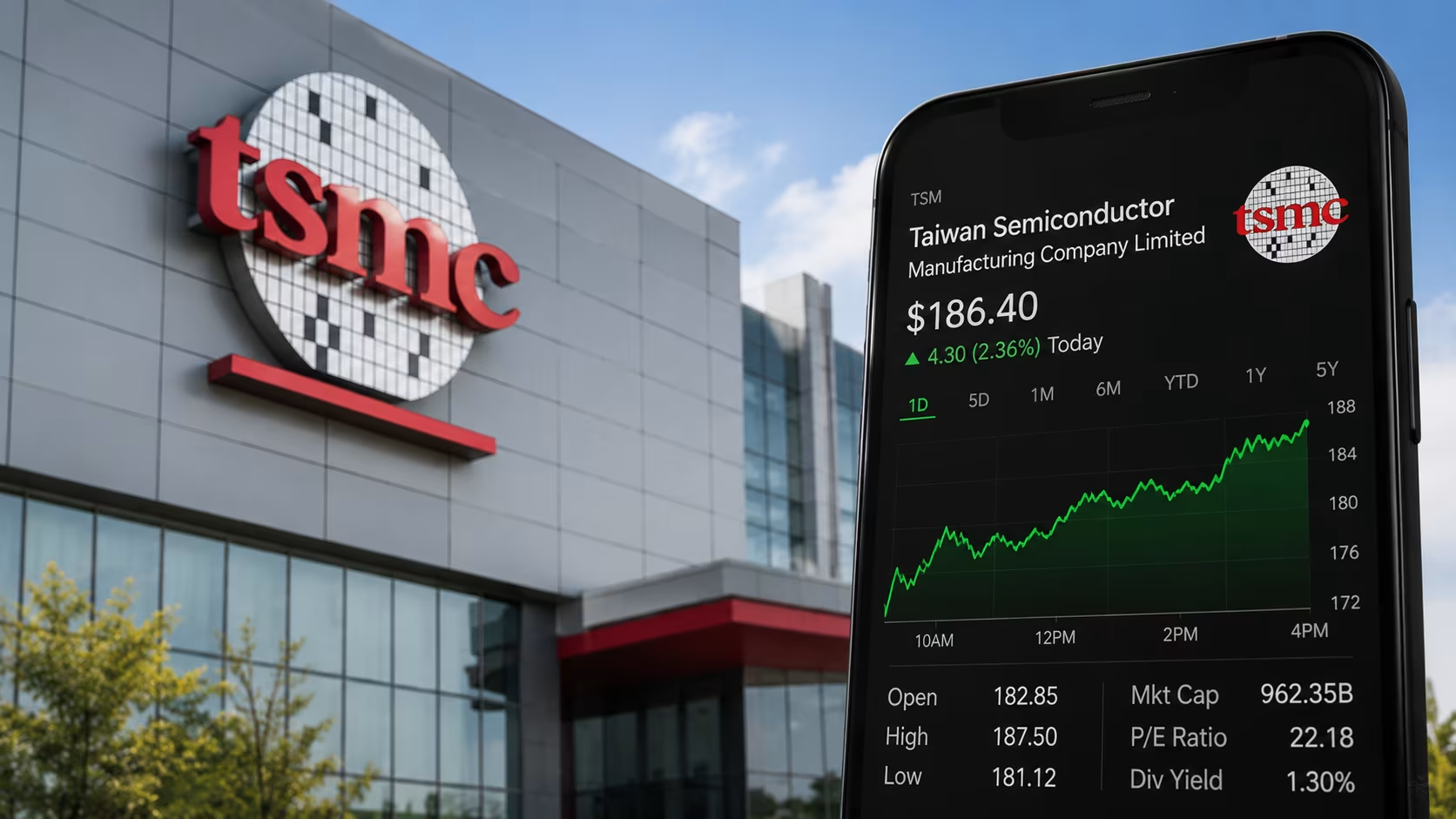
Companies like Nvidia, Broadcom, AMD, and Alphabet are not just benefiting from AI hype. They are posting real, substantial revenue growth from it. AMD, for instance, surged nearly 20% in early May 2026 after reporting a Q1 2026 earnings beat and a strong data center outlook.
Broadcom generated $8.4 billion in AI chip revenue in just the first quarter of its fiscal year 2026. Analysts expect Broadcom’s bottom line to double in just two years. These are not small numbers — they are the foundation of the Nasdaq’s fast movement.
2. Strong Corporate Earnings and Buybacks
In 2025, U.S. stock buyback authorizations and executions crossed $1 trillion for the first time. That means companies were actively purchasing their own shares, which pushes stock prices higher and signals confidence in their own future.
Corporate earnings in the technology sector remained well above average in 2025, with the top 10 companies in the Nasdaq-100 delivering an average total return of 35% over the year. Palantir, Alphabet, and Broadcom each exceeded 50% returns.
These solid earnings numbers carry over into 2026, giving investors a real reason to stay in growth stocks.
3. Easing Financial Conditions and Rate Cut Expectations
Throughout 2025, the Federal Reserve moved through an easing cycle, and accommodative financial conditions helped fuel risk-taking across markets. Lower rates make growth stocks more attractive because future earnings become more valuable today.
As of May 2026, rate cut timing remains uncertain due to sticky inflation. But the broader trend toward lower rates still supports the Nasdaq’s long-term movement. Investors continue to watch every Fed signal closely for clues about what comes next.
What Investors Should Watch Right Now
Inflation Data Is the Wildcard
The May 12, 2026 sell-off showed just how sensitive the Nasdaq is to inflation surprises. A hotter CPI print can push back rate cut expectations almost overnight, causing growth stocks to dip quickly. Keep one eye on monthly inflation reports.
Concentration Risk Is Real
The top 10 companies in the Nasdaq-100 make up 52% of the entire index’s weight. That level of concentration means a bad day for one or two mega-cap names can drag the whole index lower, even if hundreds of other stocks are doing fine.
Tech Earnings Drive the Story
With 83% of S&P 500 companies beating Q1 2026 earnings expectations, the market is sitting on a strong foundation. But investor expectations are also high. A single earnings miss from a mega-cap tech company can shake confidence quickly.
Volatility Is Part of the Package
The Nasdaq has historically been more volatile than the S&P 500. On average, its one-year rolling volatility runs about 2.8% higher. Investors who enter the Nasdaq should expect swings — and plan for them.
Nasdaq Prediction: What Analysts Are Saying About the Rest of 2026
The overall prediction from Wall Street is cautiously optimistic. Here is what the data and expert commentary suggest:
AI momentum will likely continue. Massive AI infrastructure spending is structural, not just speculative. Companies are building data centers, buying chips, and deploying AI in ways that generate real revenues.
Earnings growth remains the engine. Technology sector earnings are expected to keep growing through 2026, supported by AI adoption, fiscal stimulus, and deregulation.
A bull market has room to run. Market strategists at Carson Group point to historical data going back to 1950 showing that once a bull market reaches three years of age, it can average eight full years of expansion. The current cycle still has time.
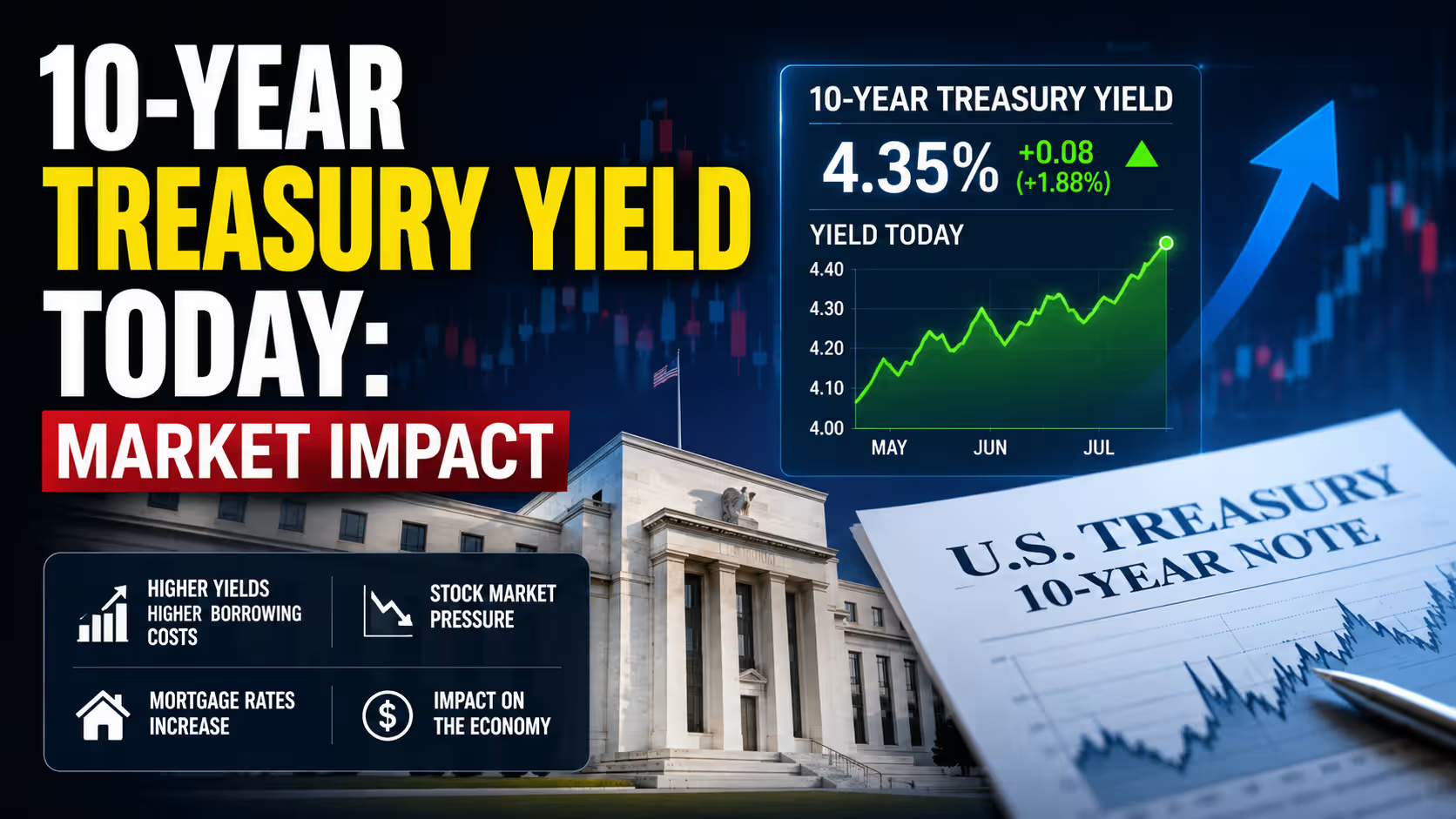
But risks are not gone. Rising yields, geopolitical tensions, and the possibility of a Fed rate hike (which now carries a 45% probability sometime in 2026 per CME FedWatch Tool data) are all live concerns. Markets hate uncertainty, and plenty remains.
How Everyday Investors Can Approach the Fast-Moving Nasdaq
You do not need to be a Wall Street expert to make smart decisions in a fast-moving market. Here are a few practical approaches:
Stay diversified. Even within the Nasdaq, concentration in a few mega-cap names adds risk. A broad index fund or ETF can give you exposure across many companies.
Think long-term. The Nasdaq’s long-term track record — 1,308% gain since 2007 — rewards patient investors far more than short-term traders chasing daily swings.
Do not panic on pullbacks. Drops like the 1.1% decline on May 12, 2026 are normal. The Nasdaq bounced back from a steep 33% decline in early 2025 to finish the year up 21%. Perspective matters.
Reinvest when valuations dip. Pullbacks caused by macro fears (like inflation data) can sometimes offer better entry points into quality tech companies.
Consult a financial advisor. Given the concentration risk and volatility of the Nasdaq, a professional can help you size your exposure correctly based on your personal goals and risk tolerance.
Final Thoughts
The Nasdaq is moving fast in 2026 because AI investment is real, earnings are strong, and investor confidence in technology has rebounded sharply after a rough start to the year. The index has already hit multiple record highs this month, and the drivers behind it are not going away anytime soon.
But fast-moving markets cut both ways. Inflation, rate policy, and concentrated tech bets all add risk that every investor must understand. Stay informed, stay diversified, and think beyond the daily headlines.
The Nasdaq is moving fast in 2026 mainly because of the artificial intelligence investment boom. Large tech companies are spending massively on AI infrastructure, which is driving strong earnings growth across semiconductors, cloud computing, and software stocks. Strong Q1 2026 earnings — with 83% of S&P 500 companies beating expectations — are adding extra fuel to the rally.
As of May 11, 2026, the Nasdaq Composite hit a record high of 26,274.13. The index is up approximately 8.3% year-to-date in 2026 as of mid-May, following a strong 21% gain in 2025.
That depends on your personal financial goals and risk tolerance. The Nasdaq has strong long-term fundamentals, including AI-driven earnings growth and a 1,308% return since 2007. However, it carries above-average volatility and concentration risk. Speaking with a financial advisor before making any investment decisions is strongly recommended.
Semiconductor and AI-related stocks are leading the Nasdaq in 2026. Companies like Nvidia, Broadcom, AMD, and Alphabet have been the top performers. The PHLX Semiconductor Index jumped 2.6% in a single day on May 11, 2026, reflecting the massive demand for AI chips and infrastructure.
The biggest risks include hotter-than-expected inflation that could delay Federal Reserve rate cuts, rising U.S. Treasury yields that hurt growth stock valuations, high concentration among a few mega-cap companies, and geopolitical uncertainty. A CPI data surprise on May 12, 2026 alone caused the Nasdaq to drop more than 1% in a single session.
The Nasdaq-100 has significantly outperformed the S&P 500 over the long term. Since December 31, 2007, the Nasdaq-100 has returned over 1,308% compared to the S&P 500’s 543%. However, the Nasdaq is also more volatile, running about 2.8% higher in annualized rolling volatility on average. It tends to outperform during strong tech and growth cycles and underperform during rate-hiking or risk-off periods.
Most analysts remain cautiously optimistic about the Nasdaq for the rest of 2026. The AI investment cycle is expected to continue driving earnings growth in tech. However, inflation uncertainty and potential Federal Reserve rate hikes present real downside risks. Historical bull market data suggests the current cycle could have further to run, but volatility is likely to stay elevated.